Understanding Ladder Frame Inspection Limitations
Why Kei Truck Underbody Documentation Is Different
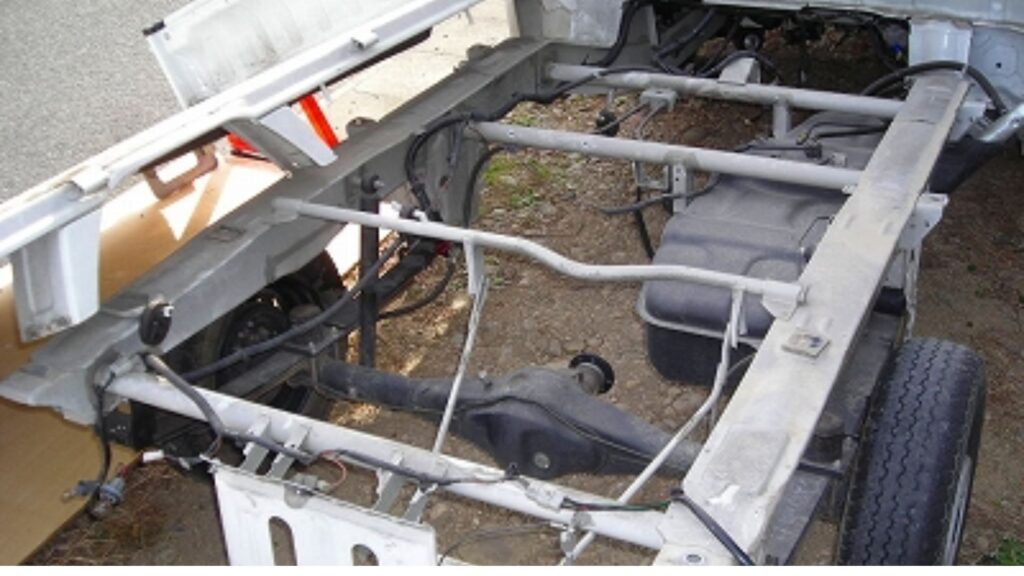
Kei trucks are built using a ladder-frame chassis design, which differs significantly from the monocoque structure used in most passenger vehicles.
This structural design means that key frame components are positioned deeper inside the vehicle’s underbody, often making them difficult to access visually without mechanical lifting.
As a result, underbody documentation for kei trucks may be more limited compared to standard passenger cars.
This is a normal characteristic of kei truck construction, not a limitation of the verification process.
Typical Challenges During On-Site Documentation
During a verification visit, the ability to document the underbody of a kei truck depends heavily on real-world site conditions.
Common challenges may include:
• limited ground clearance
• uneven or gravel surfaces
• restricted working space
• poor lighting conditions
• safety restrictions at dealer locations
• weather conditions such as rain or mud
Auto Labo documents all reasonably accessible areas without lifting the vehicle or performing mechanical disassembly.
Key Areas Typically Documented
When access allows, verification documentation may include visual coverage of:
• front suspension mounting points
• rear leaf spring mounting areas
• visible frame rails
• cargo bed underside structure
• lower engine area
• visible signs of corrosion or repair
Documentation coverage varies by vehicle and site conditions.
Understanding Rust on Kei Trucks
Kei trucks are frequently used for agricultural, commercial, or outdoor environments.
As a result, surface corrosion is common and does not automatically indicate structural failure.
However, structural rust around:
• frame joints
• suspension mounts
• leaf spring supports
• crossmembers
may require further mechanical inspection.
Auto Labo documents visible rust conditions but does not evaluate structural integrity.
Important Limitations of Visual Verification
Auto Labo provides visual documentation only.
This service does not include:
• mechanical inspection
• structural safety certification
• rust severity evaluation
• drivetrain condition assessment
• road testing
If a higher level of certainty is required, buyers should arrange a full mechanical inspection through a qualified repair facility.
Why Independent Kei Truck Verification Matters
Independent documentation helps overseas buyers:
• understand real-world vehicle condition
• identify visible rust and wear
• reduce uncertainty before payment
• avoid misunderstandings with sellers
• make informed purchase decisions
Kei trucks are simple vehicles, but condition varies widely depending on usage history.
Visual verification provides clarity before financial commitment.
Auto Labo Approach
Auto Labo focuses on realistic documentation under real-world conditions.
We document what is reasonably accessible at the time of visit, without altering the vehicle or requiring special workshop equipment.
This approach ensures neutral, practical, and transparent reporting.